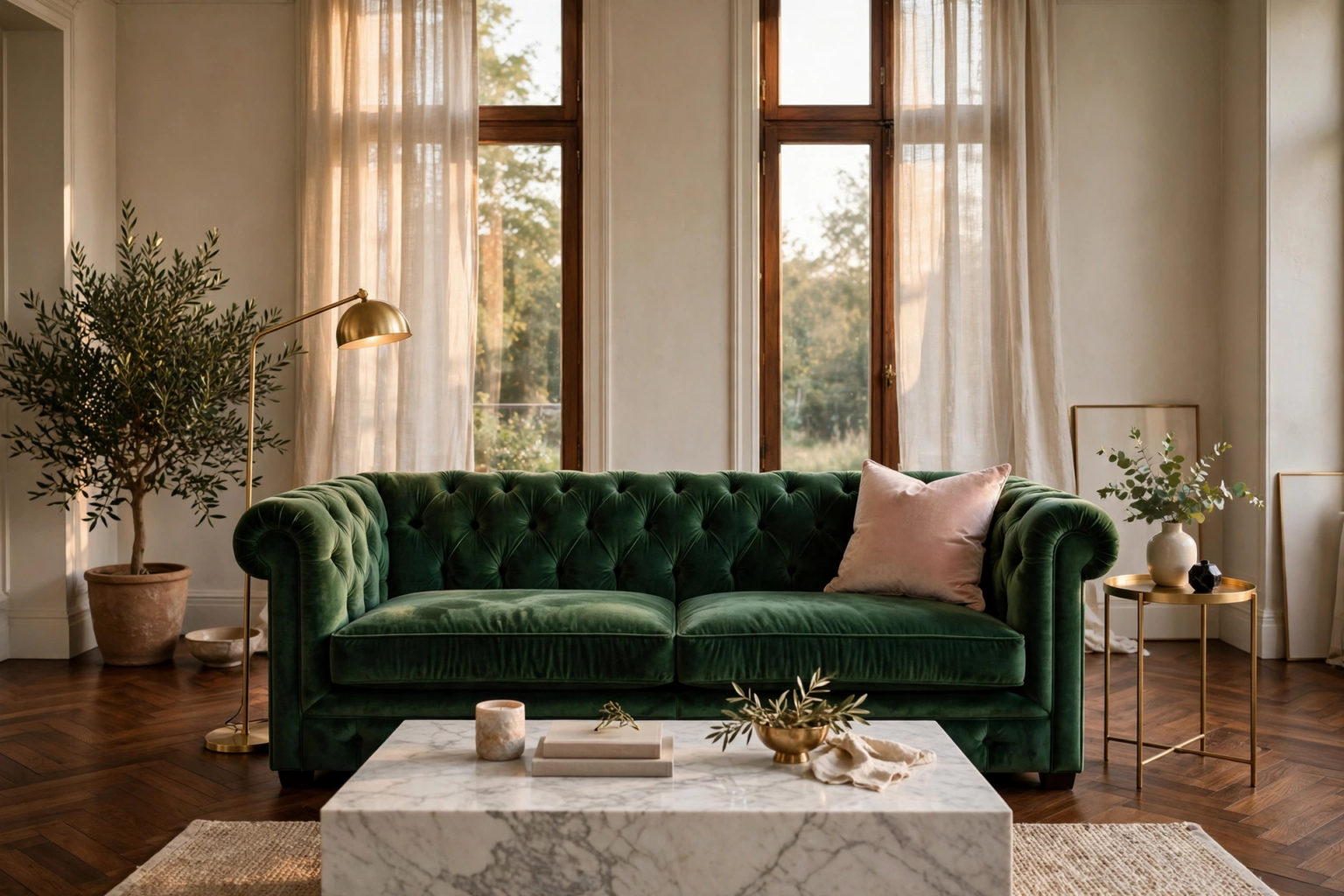

Some fabrics decorate a room. Velvet seduces it.
Walk into a room with a velvet sofa and you feel it before you can name it. The light goes softer. The color goes deeper. The whole space seems to lean in a little closer. Velvet has been working this particular magic for centuries, on kings, on movie stars, and now on anyone with a living room and good taste. This is the short, seductive history of design’s most luxurious fabric, and the sofa that became its signature.
It began as power, woven in silk
Velvet was never meant for everyone. In the Middle Ages, silk velvet was so labor intensive to weave that it belonged almost entirely to royalty, the clergy, and the very wealthy. The great Italian looms of Venice, Florence, and Genoa turned it into an art form, guarded by guilds and reserved for thrones, altar cloths, and the portraits of kings.
Velvet was not simply expensive. It was a public statement. To dress a room in velvet was to announce that you had arrived, centuries before anyone used that phrase.
Hollywood taught it to be glamorous
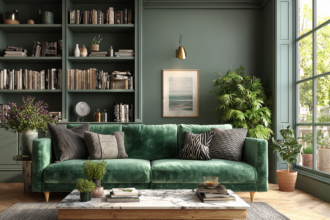
The velvet sofa as we know it was born under studio lights. In the 1930s, 40s, and 50s, Hollywood regency style put velvet center stage: deep tufted sofas in emerald and ruby, mirrored tables, lacquered surfaces, rooms designed to be photographed. Set designers understood something about velvet that still holds true. It drinks the light and gives back depth. On camera, it looked like wealth you could touch.
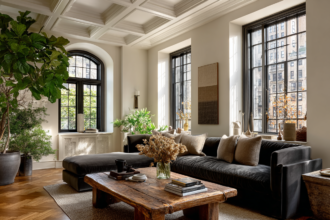
The stars wanted that drama at home, and the velvet sofa became the signature of a particular kind of confidence: bold, polished, and completely unbothered by minimalism.
The quiet years, and the comeback
Tastes turned spare and minimal in the late twentieth century, and velvet stepped back. But it never truly left. Designers kept reaching for it in hotels, restaurants, and on film sets, anywhere a room needed instant atmosphere in a single piece.
Then came the quiet revolution: performance velvet. Stain resistant, pet friendly, and built for real life, it kept the depth and drama and lost the fragility. That is when the velvet sofa came home for good. Not as a precious object to be admired from a distance, but as an everyday luxury you can actually live on.
Why it keeps coming back
Trends cycle. Velvet endures. Every generation rediscovers the same simple truth: no other fabric gives a room this much presence with this little effort. One velvet sofa, and the space has a point of view.
Velvet does not follow trends. It outlasts them.
Shop the story: velvet sofas worth the room
Shop my velvet sofa collection
This post contains affiliate links. If you purchase through them, I may earn a commission at no extra cost to you.
The colors that love velvet most
Emerald, sapphire, burgundy, warm cognac, soft blush. Jewel tones and velvet were made for each other: the pile deepens saturated color in a way flat weaves simply cannot. But neutrals deserve their moment too. A taupe or warm gray velvet sofa reads calm and collected, especially against marble, rich wood, and a touch of gold.
Keep it beautiful
The ancestors of your sofa needed servants. Yours needs a soft brush, rotated cushions, and a spot out of harsh direct sun. Modern performance velvets are far more forgiving than the silk velvets of palaces past. The full velvet care guide arrives later in this series.
The story continues
Velvet has moved from thrones to film sets to family rooms without losing a drop of its power. That is a rare thing in design. For the room by room styling side of the story, read Why Velvet Has Defined Luxury for Centuries.