
Why Gold and Emerald
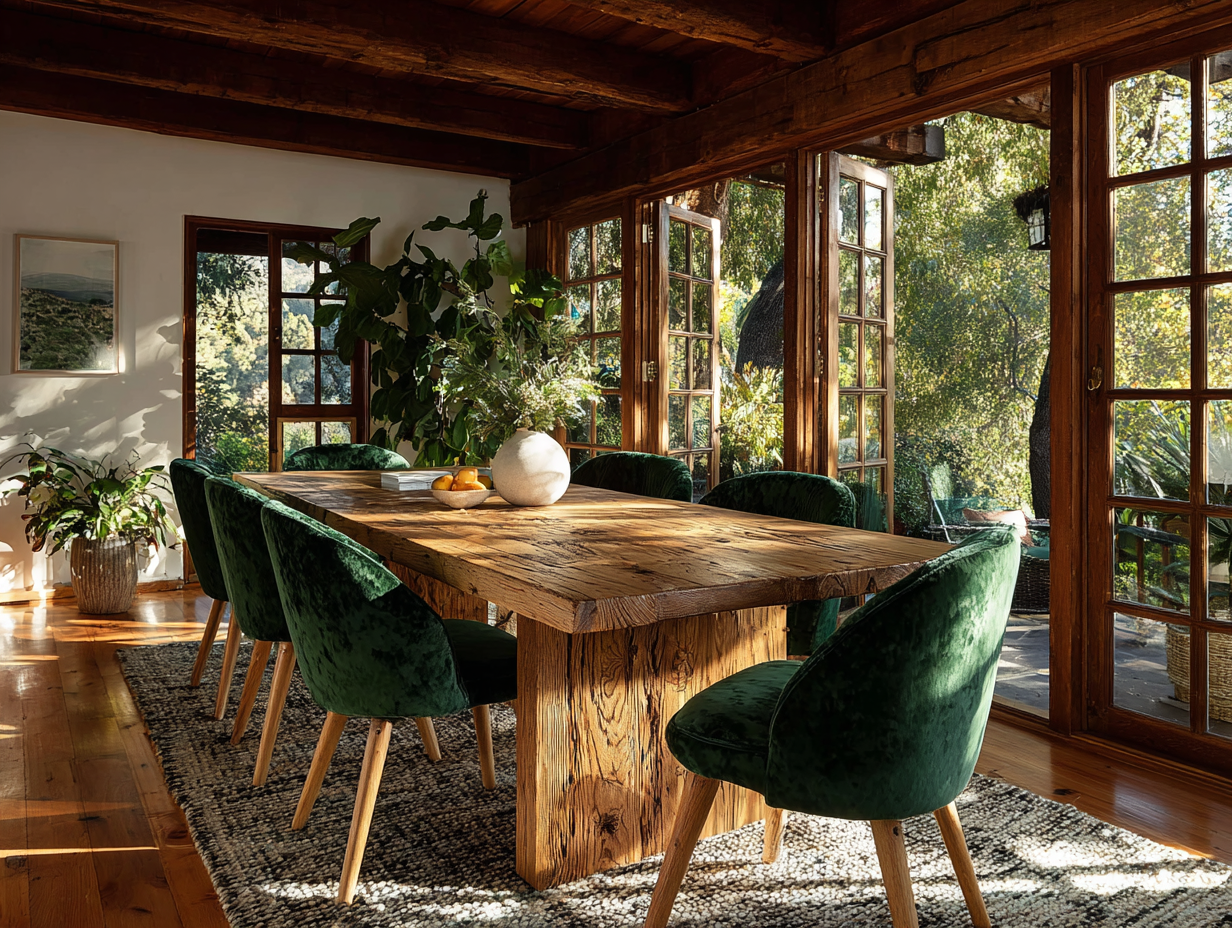
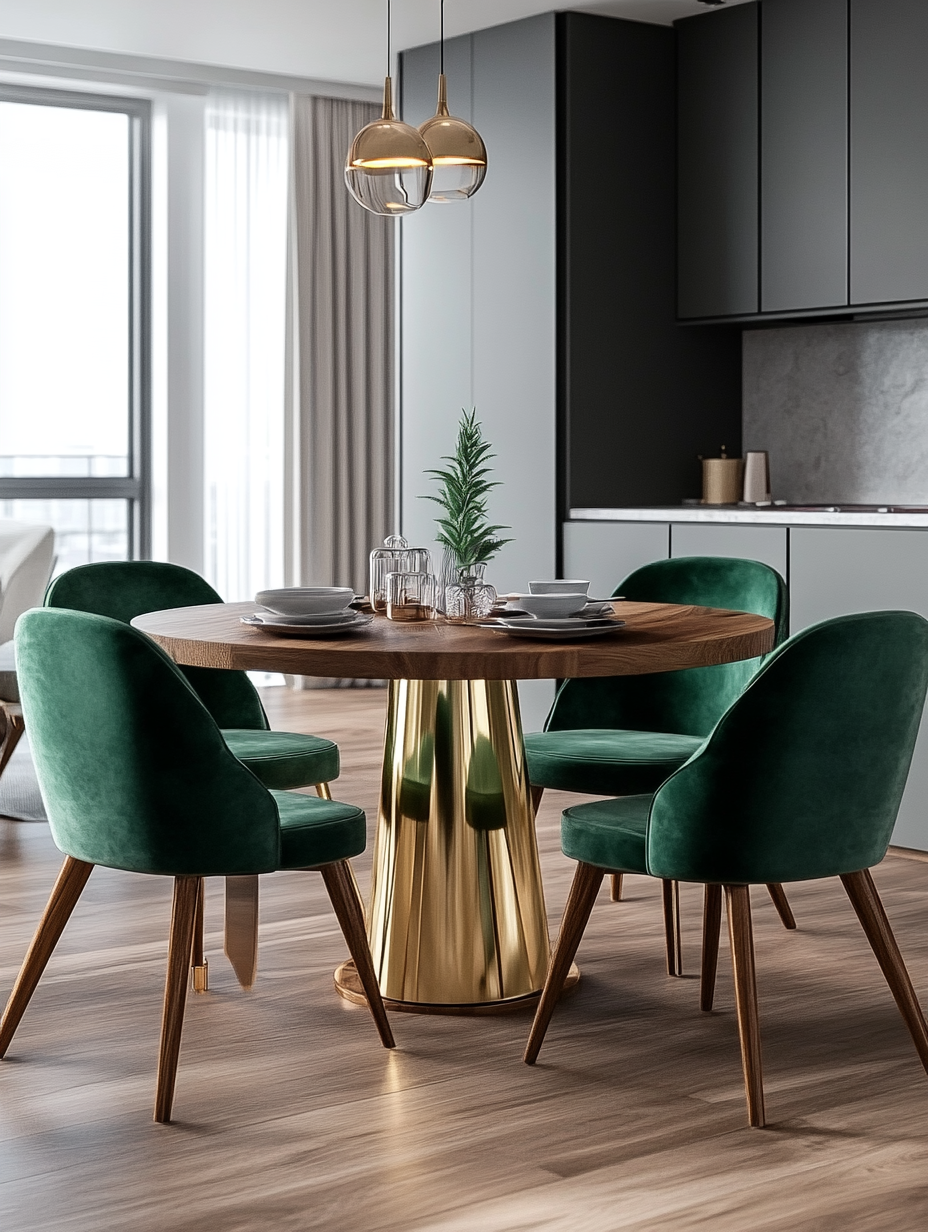
Every holiday table needs a point of view, and ours has been the same for years: gold and emerald. Not because it is trendy — though it happens to photograph like a dream — but because the combination does something few palettes can. Gold brings the warmth and the celebration; emerald brings the depth and the calm. Together they feel rich without feeling loud, festive without feeling frantic.
There is also a practical reason we return to it. Emerald is forgiving. It flatters candlelight, it hides the inevitable water ring, and it makes even simple food look intentional. Gold, used with restraint, lifts everything it touches — flatware, glassware, a plain linen napkin. The two together create a table that looks considered from the doorway and still feels relaxed when everyone sits down.
This is our complete method: the linens, the centerpiece, the light, and the small details that make guests feel like the evening was planned just for them.
Linens: The Foundation Everything Rests On
A tablescape is only as good as what is underneath it, so we start with linens and give them real thought. Our preferred base is an ivory or warm champagne tablecloth — never stark white, which can look cold under candlelight, and never a busy pattern that fights the centerpiece. If you love pattern, let it live in one place only: the napkins, or the runner, but not both.
Over the cloth, we lay a runner in deep emerald — linen or velvet, depending on the mood. Velvet reads as evening and luxury; washed linen reads as warm and organic. Both are beautiful; the choice depends on whether your dinner is candlelit formal or long-table convivial. The runner should overhang the table ends by about fifteen centimeters on each side. Too short looks apologetic; puddling on the floor looks like an accident.
One lesson learned the hard way: press or steam the linens. We once set a gorgeous table on a wrinkled cloth and every photograph showed the wrinkles first. Ten minutes with a steamer is the highest-return effort in all of tablescaping.
The Centerpiece: Low and Lush
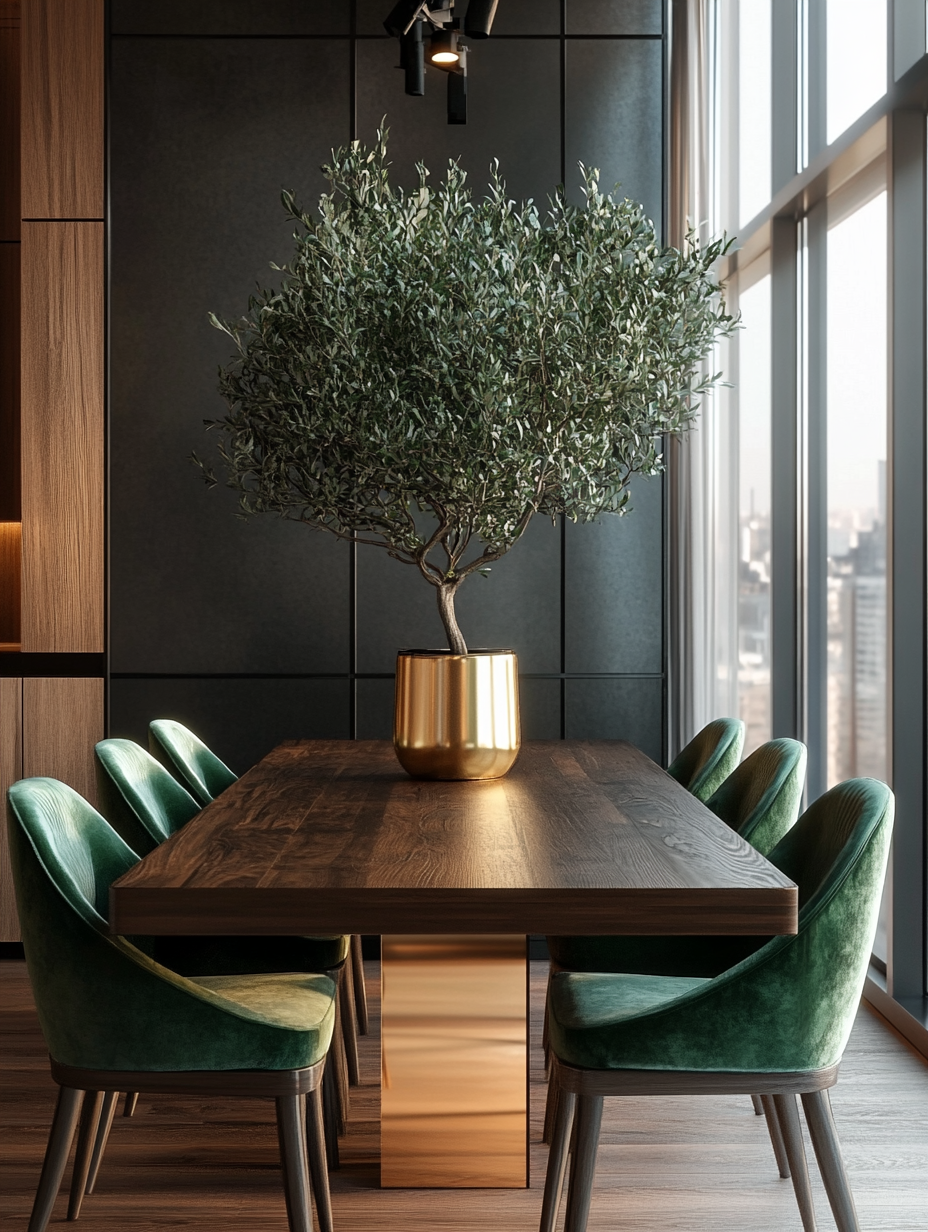
The single most important rule of our holiday centerpiece: keep it low. Nothing should rise above eye level when guests are seated, because a centerpiece that blocks conversation is a centerpiece that has failed, no matter how beautiful it is.
Our formula is a lush garland laid straight down the runner — cedar, pine, or eucalyptus, sometimes all three — so full it nearly touches the chargers on either side. Into it we tuck clusters of candles at varying heights, a few brass ornaments, and natural accents: dried orange slices, pinecones brushed lightly with gold, sprigs of berries in deep burgundy. The garland should look gathered rather than arranged, as if it grew there.
We build it directly on the table rather than in a vessel, which gives it that abundant, organic feel and costs far less than a florist arrangement. A good garland base can be reused for several seasons if stored carefully; we refresh it each year with new tucked-in accents so it never looks identical twice.
If your table is round rather than long, the same principle applies in miniature: a low, generous wreath-style ring of greenery in the center, candles rising from within it. Same lushness, same sight lines, scaled to fit.
Candlelight Is Non-Negotiable
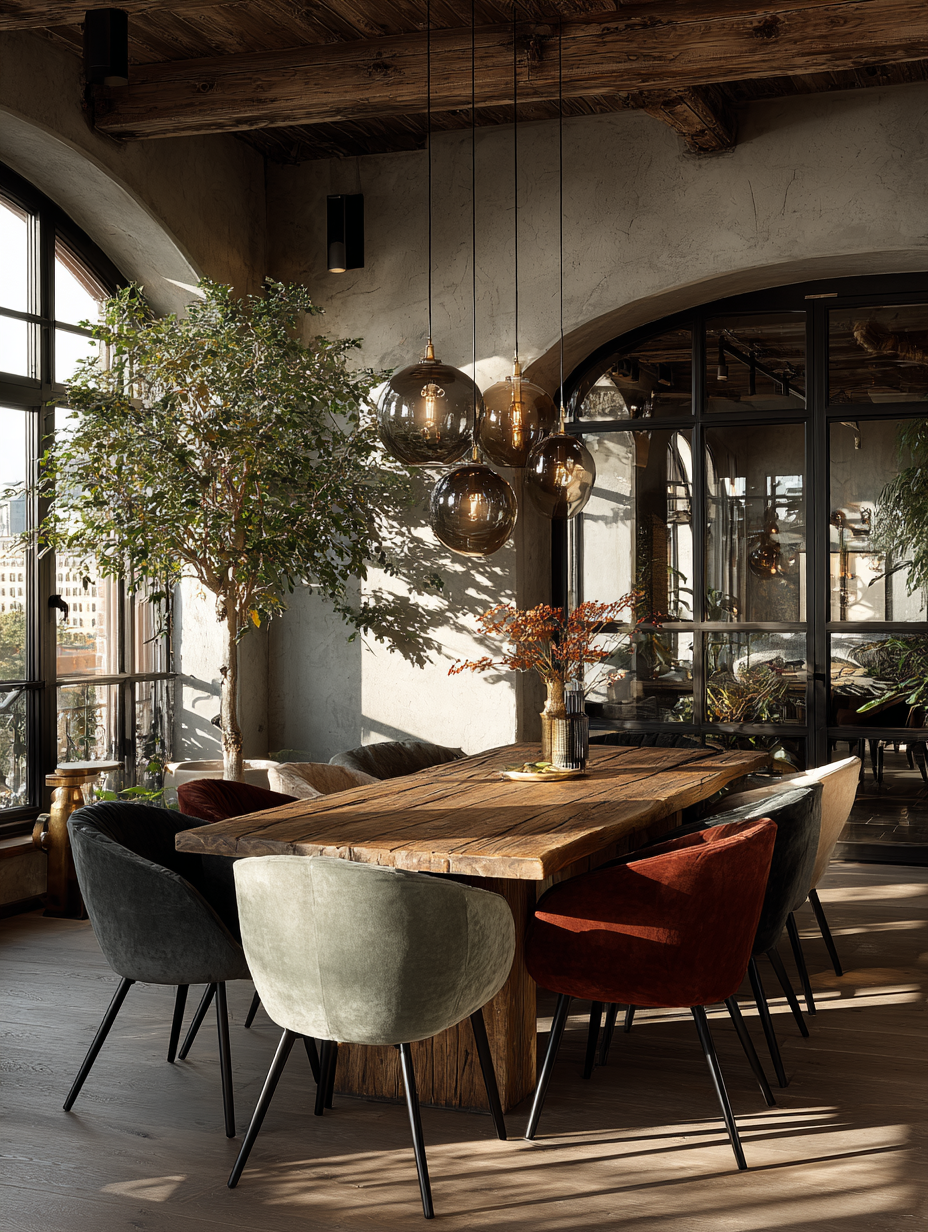
We have set this table under bright overhead lighting exactly once, and the lesson was permanent: overhead light flattens everything. Candlelight is what makes gold glow and emerald deepen. It is not an accessory to the tablescape; it is the tablescape.
We use three kinds of candlelight together. Tall brass taper holders — mismatched heights, always in odd numbers — give the vertical drama. Low votives scattered through the garland give the twinkle. And a few substantial pillar candles anchor the ends so the light feels balanced from every seat. All flames at roughly the same warm tone; mixing white and ivory candles is fine, mixing warm and cool light is not.
Dim the overheads to their lowest setting or turn them off entirely. If the room feels too dark at the edges, add a floor lamp with a warm bulb in the corner rather than raising the ceiling lights. And always — always — light the candles before guests sit down. A table of unlit candles is a promise; a table of lit ones is an arrival.
Place Settings With Intention
With the centerpiece doing the lush work, we keep individual place settings quiet and precise. The stack, from the table up: a gold charger — brushed or hammered finishes look far more elegant than mirror-shine — then the dinner plate, then a smaller salad or starter plate if the menu calls for it.
The napkin is where we allow one moment of softness: deep emerald linen napkins, folded simply in a rectangle and laid across the plates, or tied loosely with a thin velvet ribbon in burgundy with a sprig of cedar tucked in. Napkin rings are optional; we often skip them because a beautiful fold needs no hardware.
Flatware should gleam — this is the night to polish it, or at least to run it through a hot wash and dry it immediately so there are no water spots. Glassware follows a simple rule: one water glass and one wine glass per setting, both polished. More glasses look impressive on a sideboard; on the table they create clutter.
A small, handwritten place card is the detail guests remember most. It costs almost nothing — a folded card, a decent pen, names written carefully — and it tells every person at the table that their presence was anticipated. We prop ours against the napkin or tuck them into the garland in front of each plate.
Natural Touches That Make It Sing
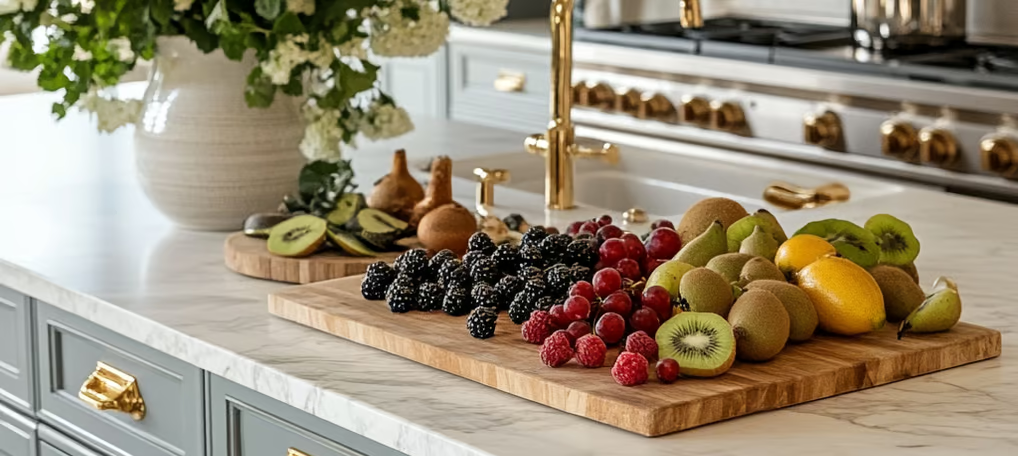
The difference between a good holiday table and an unforgettable one is usually the natural details. Ours change slightly every year, but the vocabulary stays the same: pomegranates split open to show their seeds, brown pears, clusters of dark grapes, fresh figs when we can find them. Fruit on a holiday table is an old tradition, and it brings color and abundance that no manufactured decoration can match.
We scatter a few of these through the garland and place one or two on the sideboard. They are beautiful for the first hour and delicious later, which is rather the point. A small bowl of unshelled walnuts with a brass cracker nearby gives restless hands something elegant to do before dinner is served.
Fresh herbs do quiet work too. A sprig of rosemary laid across each napkin adds scent every time a guest lifts it — a tiny, sensory detail that costs pennies and feels like luxury.
What to Avoid
Restraint is a practice, so here is what we edit out. Bright red and kelly green have no place in this palette — burgundy and emerald give you the Christmas feeling without the primary-color shout. Glitter is used sparingly or not at all; a little gold shimmer on a pinecone is lovely, a glittered everything looks dusty by dessert.
We avoid tall centerpieces entirely, as discussed, and we avoid more than two patterns on the table. If the runner is solid emerald and the napkins are solid, the eye rests; if every textile is competing, the table feels anxious. Finally, we never use scented candles at the dinner table. Fragrance and food are rivals, and food should win.
The Timeline: When to Set It All
A relaxed host is the best decoration, so we work backward from guest arrival. Two days before: press linens, polish flatware and glassware, confirm candle inventory. The morning of: lay the cloth, runner, and garland base; arrange the centerpiece fully — greenery holds beautifully for a day. Two hours before: set chargers, plates, napkins, glassware, and place cards. Thirty minutes before: dim the lights, light every candle, and do one slow walk around the table adjusting anything that catches your eye.
Then stop. Pour yourself something, and let the table do what it was built to do. A gold and emerald Christmas tablescape is not about perfection — it is about creating the kind of warmth that makes people linger long after the plates are cleared. That lingering is the whole point of the season, and the best-dressed table is simply the one that makes it happen.