
You are probably eating less protein than your body would like. Not dramatically less. Just quietly, consistently less, in the way that shows up as a 3 p.m. energy dip, a snack habit you cannot quite shake, and workouts that never seem to add up.
Protein has become the loudest nutrient in the room, and the conversation around it is exhausting. So here is the calm version. What protein actually does, how much you truly need, and how to get there without a calculator app running your life.
What protein is actually doing for you
Protein builds and maintains. Muscle, yes, but also the less visible work: enzymes, hormones, immune cells, the steady machinery that keeps you running. It keeps you full longer than carbohydrates do, and it softens the blood sugar swings that turn an afternoon into a craving parade.
You do not need to be building muscle for protein to matter. You need it to keep the muscle you already have, and that becomes more important with every passing year. After 40, the body lets go of muscle a little more eagerly. Protein is part of how you hold your ground.
The math, made simple
Here is the part most guides skip. The official recommendation, the RDA, is 0.8 grams per kilogram of body weight. That is the minimum to avoid deficiency, not the amount where most women feel their best. Research on active adults points higher: somewhere around 0.7 to 1.0 grams per pound of body weight, with the higher end for people who strength train or are working to lose fat while keeping muscle.
A simple way to estimate yours:
- Take your body weight in pounds.
- Multiply by 0.8 if you are lightly active, or by 1.0 if you train regularly or want to preserve muscle while losing weight.
- That number is your daily target in grams.
For a 140-pound woman who walks and does a couple of strength sessions a week, that lands around 110 to 140 grams a day. If that number looks big, you are not alone. Most women eat far less without realizing it.
What 120 grams looks like on a plate
Forget grams for a moment. Here is what a 120-gram day actually looks like in food:
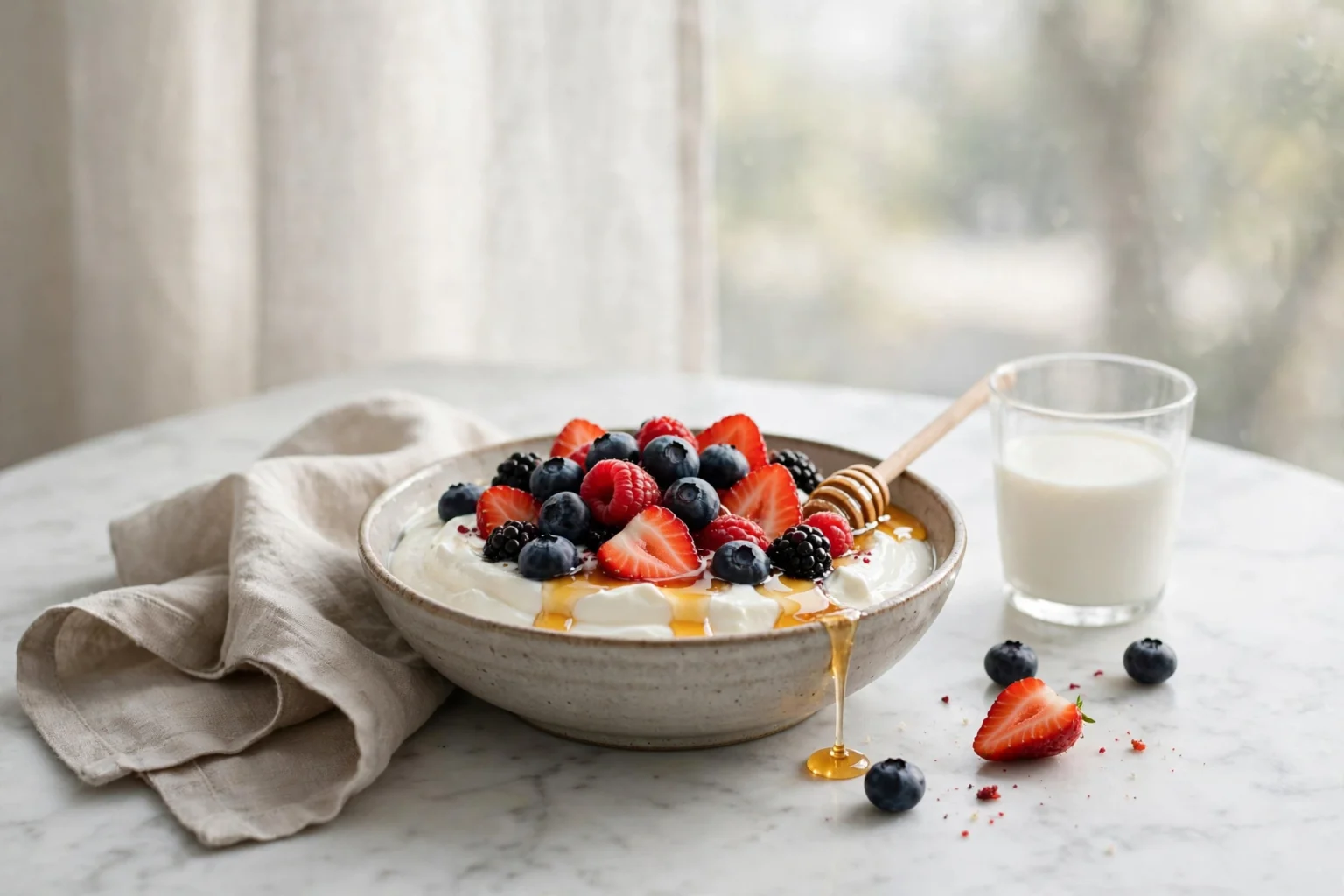
Breakfast: Greek yogurt bowl with berries and a spoonful of nut butter (about 30 grams)
Lunch: a big chicken or turkey salad with beans or lentils (about 40 grams)
Snack: cottage cheese with fruit, or a small protein shake (about 20 grams)
Dinner: salmon or chicken with vegetables and quinoa (about 35 grams)
Nothing extreme. No plain chicken breast at every meal, no gallon of egg whites. Just meals anchored around a protein source, which is the entire trick.
Signs you might be running low
The body is polite about protein shortfalls. It does not send an alarm. It sends hints: feeling hungry an hour after meals, strength you used to have quietly slipping, hair and nails that feel thinner, slow recovery after workouts, and the gradual loss of muscle that passes for normal aging.
If several of those sound familiar, it is worth a week of honest tracking. Not forever. Just long enough to see where you actually land.
A note on protein powder
Protein powder is not required. It is simply convenient: roughly 20 to 25 grams in a scoop, easy to add to a smoothie or a bowl on busy days. Whey is the most studied and usually the best value; plant blends work well if dairy is off your table. Look for short ingredient lists and third-party testing, and treat powder as a helper, not a foundation. Real food first, powder for the gaps.
Protein powders worth keeping around
This post contains affiliate links. If you purchase through them, I may earn a commission at no extra cost to you.
Stock the pantry

- NATURAL PEANUT BUTTER: Our sugar free peanut butter is natural and made with just two ingredients: peanuts and...
- EXTRA LARGE 2.5 POUND JAR: Now get your favorite Once Again peanut butter in a large 2.5-pound (40 ounce) jar...


- PLANT-BASED OMEGAS-3 — Omega fatty acids are essential fatty acids, and luckily chia seeds organic contain...
- NUTRIENT-DENSE SUPERFOOD — Not only do chia seeds contain plant-based omega-3s and 6s, but they also contain...
Oops! Product no longer available.
Oops! Product no longer available.
Oops! Product no longer available.
The one line to remember
Protein is not a diet strategy. It is maintenance for the body you want to keep.
For a real-life look at how a high-protein day comes together, see the daily routine here: https://elegantanddriven.com/easily-hit-100g-protein-and-25g-fiber-daily-my-daily-routine/