

How to Buy a Wool Coat From High Street Brands (And Why It’s Worth Doing Right)
If you live in a cold climate, especially in Canada, a wool coat isn’t just another seasonal purchase. It’s an investment piece, one that works hard for months at a time and travels beautifully across cities and lifestyles.
A great wool coat carries you through spring, fall, and large parts of winter, and it transitions effortlessly when you travel. I’ve worn the same styles in Montreal, London, Paris, New York, Hong Kong, Shanghai, and even L.A. – layered over dresses, tailored trousers, denim, or eveningwear. A strong wool coat instantly elevates an outfit in a way very few pieces can.
And while I do occasionally buy designer coats from Prada or Burberry, I intentionally avoid spending thousands. Wool coats, unlike handbags, don’t last forever. Even the best ones have a 5–10 year lifespan, which makes high-quality high street brands the smartest place to invest.
Here’s exactly how I shop for wool coats, and what you should look for when buying one from high street brands like Aritzia, Mango, or Zara.
1. Wool Percentage: The Non-Negotiable Starting Point
The first thing I look at is always the outer shell composition.
A wool coat should feel substantial, structured, and insulating, not soft and flimsy. Ideally:
- 70–100% wool is where you want to be
- Wool blends are fine, but wool should be the dominant fiber.
- Avoid coats where wool is a minor component, padded out with polyester.
High wool content affects:
- Warmth
- Structure and drape
- Longevity and shape retention
A coat with high wool content behaves more like a tailored suit; it holds its form, falls cleanly on the body, and instantly looks refined.
2. Where the Wool Comes From Matters More Than You Think
Not all wool is created equal.
High street brands often source wool from different regions, and this information is sometimes (but not always) disclosed on the label or product description.
Key things to look for:
- Italian wool (often finer, softer, better finished)
- European milled wool blends
- Clear sourcing information from the brand
Made-in-China does not automatically mean poor quality; many luxury brands manufacture there, but what matters is the origin and processing of the wool itself, not just where the coat is sewn.
Brands like Aritzia tend to be more transparent, often specifying:
- Wool origin
- Fabric quality
- Temperature ratings
This is one reason I consistently trust them for investment-grade high-street outerwear.
3. Lining: Fully Lined Is a Must (With Rare Exceptions)
A proper wool coat should be fully lined.
Lining affects:
- Warmth
- Comfort
- Durability
- How the coat slides over your clothes
Unless the coat is intentionally designed as a very light layering piece, an unlined wool coat is a compromise.
Look for:
- Full lining through the body and sleeves
- Smooth, well-attached lining (no pulling or twisting)
- Structured interiors that resemble tailoring, not fast fashion
A coat without proper lining will lose shape more quickly and feel colder, even if the wool content is high.
4. Temperature Ratings: Shop for Your Climate, Not the Model Photo
One of the most underrated features of modern high-street coats is temperature guidance.
Brands like Aritzia often specify whether a coat is designed for:
- Mild weather (around -5°C)
- True winter conditions (down to -20°C)
- Transitional layering
This matters enormously.
A beautifully tailored coat that only works to -5°C will disappoint you in a Canadian winter, but it might be perfect for Paris, London, or New York.
Before buying, ask yourself:
- Is this a daily winter coat?
- A travel coat?
- A statement piece for a mild cold?
Matching the coat to its actual thermal function is the difference between loving it and resenting it.
5. Construction: A Wool Coat Should Feel Like Tailoring
When you try on a wool coat, it should feel closer to a well-made blazer or suit jacket than to outerwear.
Signs of good construction:
- Clean shoulder structure
- Smooth seams and precise stitching
- Weight that feels intentional, not heavy or flimsy
- A silhouette that holds without effort
This is why I often gravitate toward Aritzia, Mango’s premium lines, and Banana Republic (when the fabric and cut are right).
And it’s also why, occasionally, I still buy Prada or Burberry; their construction sets the benchmark. But I use that benchmark to evaluate high street options.
6. Why High Street Wool Coats Make Sense (Even for Designers)
As someone who works in fashion and lifestyle content, I see wool coats for what they are: high-impact, high-rotation pieces with a finite lifespan.
They:
- Face constant friction and weather exposure.
- Age faster than leather goods or bags
- Reflect changing silhouettes over time.
Spending wisely, not excessively, is part of dressing intelligently.
A beautifully made high street wool coat can:
- Look designer-level
- Perform across climates
- Elevate everything you wear
- Last 5–10 years with proper care
That’s a strong return on investment.
Recap: Buy Better, Wear Everywhere
A wool coat is one of the most statement-making pieces in a wardrobe. It frames your outfit, defines your silhouette, and travels effortlessly across cities and seasons.
When shopping on the high street:
- Prioritize wool content
- Understand sourcing
- Demand proper lining
- Match the coat to your climate.
- Respect construction like tailoring
Do that, and your wool coat won’t feel like a trend purchase; it will feel like a signature.
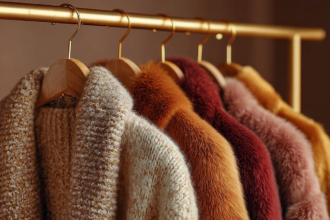
Seasonal Editor’s Picks: Wool & Fur Coats
Statement-making outerwear designed for real life—cold climates, city walks, and timeless wardrobes. Shop our curated favorites for the season.