
How Much Protein Do You Really Need?
The Most Famous Question About Protein Intake — Answered
Most people think protein is just for bodybuilders — not something regular people need to think about.
But the awareness is shifting.
The truth is: most people are under-eating protein. Not intentionally, but because they’ve never really learned how much their body needs.
Why Protein Matters (Even If You’re Not Lifting Weights)
Protein isn’t just for athletes or people trying to have visible muscles. It’s the foundational macronutrient your body uses for:
- Muscle maintenance and repair
- Healthy hormone production
- Immune function
- Skin, hair, and nail health (remember: collagen is a type of protein)
- Blood sugar stability and satiety
And here’s the kicker: after age 30, we start to lose muscle mass naturally — about 3–8% per decade. This loss accelerates after 60 unless we intervene with two powerful tools: strength training and enough protein.
Even if you’re not working out right now, a high-protein diet helps preserve the muscle you already have.
The Real Problem: Most People Aren’t Eating Enough Protein
Let’s say your ideal body weight is 140 pounds.
If you follow the bare minimum government recommendation of 0.36g per pound, that’s just 50g of protein a day — barely enough to prevent deficiency, let alone support muscle or energy.
A better rule of thumb?
Aim for about 0.8 to 1.2 grams of protein per pound of your ideal body weight.
That means if you’re aiming to weigh 130 lbs, you should aim for 100–132g of protein daily. It’s not extreme. It’s optimal.
To keep it simple:
Just create a rough range based on 1g per pound of ideal body weight — and be flexible on your daily average across the week.
My Own Intake: A Realistic, Flexible Approach
I aim for around 120g of protein a day, but I don’t track obsessively.
Most days, I land between 90 and 135 grams.
Some weeks I’m lower, some weeks I’m higher — but on average, I know I’m in a range that supports strength, satiety, and energy.
And honestly?
Your body doesn’t start counting protein at midnight.
You can think in weekly averages. What matters most is your consistent intake over time.
Not All Goals Are the Same: Protein Needs by Lifestyle
Here’s a general guide:
| Lifestyle Type | Target Protein Intake |
|---|---|
| Sedentary / Minimal activity | 0.8–1g per pound of ideal body weight |
| Regular daily movement + strength goals | 1g per pound of ideal body weight (recommended) |
| Active lifestyle or toning body | 1–1.2g per pound of ideal body weight |
| Athlete / bulking phase | 1.2–1.5g+ per pound of body weight |
Toned Body Goals?
If you want visible abs or a lean, defined body, protein is your best ally.
You’ll need more than the average person — not just for muscle growth but to maintain muscle while reducing fat.
As always, consult with your doctor or a qualified healthcare professional before making any major changes to your diet, especially if you have pre-existing health conditions.
A Few Final Thoughts
- You don’t have to count macros.
Just anchor every meal with a quality protein source and build around it. - Start with breakfast.
Skipping protein in the morning sets you up for cravings later in the day.
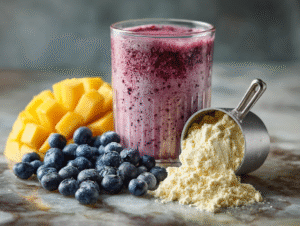
Here is my morning smoothie recipe
- It’s okay to supplement.
Greek yogurt, protein powder, lentil pasta, edamame, canned salmon — these are practical, everyday tools I use to hit my numbers.
The Quiet Rule That Works
Protein isn’t a diet hack.
It’s a daily habit that supports strength, energy, and long-term health.
So the next time you wonder how much protein you need —
Forget the trends. Forget the gym talk.
Just remember this:
Your body needs enough protein not just to grow muscle — but to keep what you already have.
And that’s a quiet power worth building every day.
Related Reads You’ll Love
- How to Always Eat High-Protein and High-Fiber Meals
An elegant daily system to keep you full, energized, and strong. - 2. Protein Anchors: Protein 101 – Everything You Need To Know About Protein
A simple mindset shift that helped me eat more protein without obsessing.
Start Building a High-Protein Life
Want to feel full, focused, and strong — without tracking everything?
Start small. Anchor each meal with protein. Explore smart add-ins. Focus on your average, not perfection.
Explore My High-Protein Favorites on Amazon Below to get started.