

Everything in Life Works With Emotion: Including the Stock Market
This is not financial advice. I am not a financial advisor. This article reflects only my personal experience and perspective.
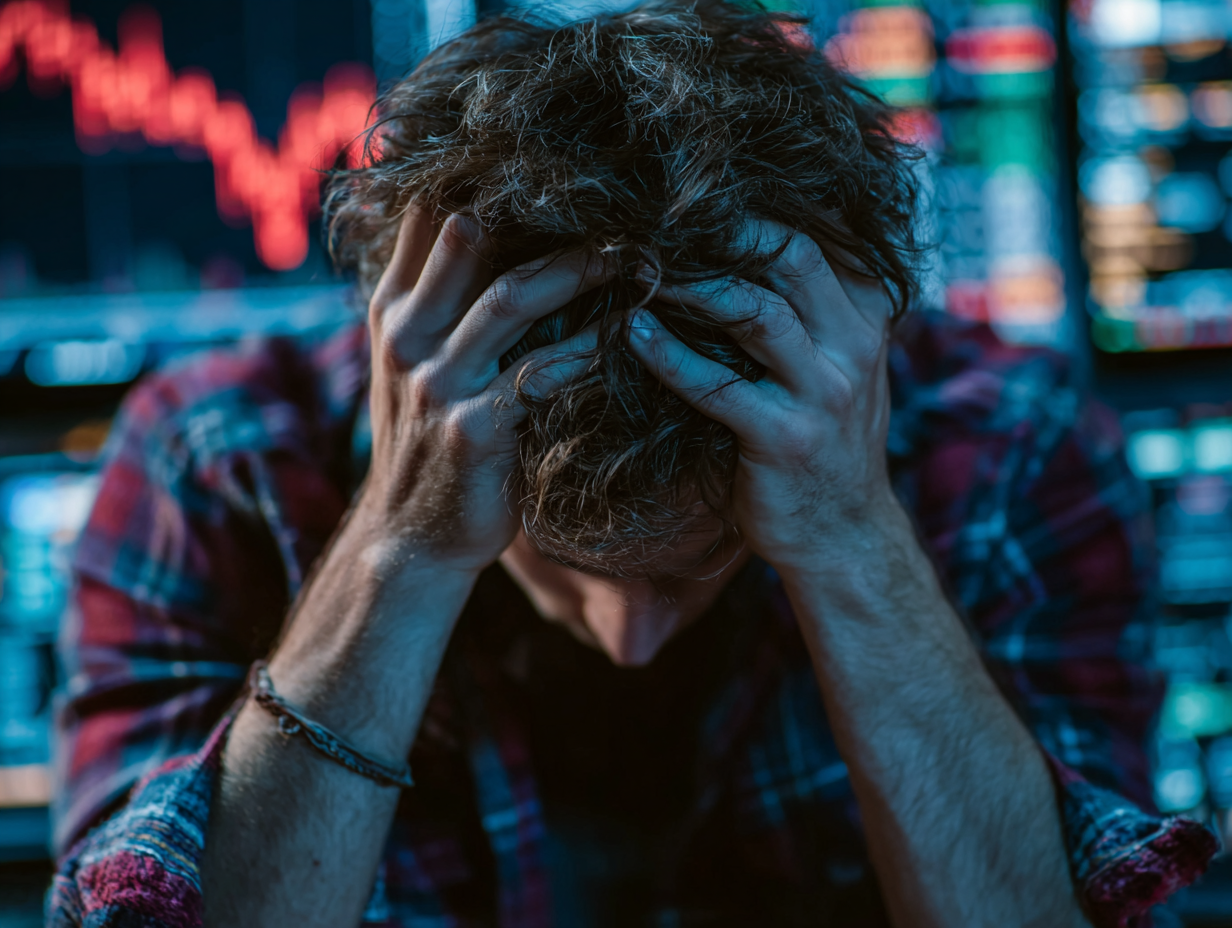
The stock market operates on a powerful emotion: fear.
We like to believe markets are logical.
We like to believe they move in response to earnings reports, balance sheets, revenue growth, and technical indicators.
We like to believe they move in response to earnings reports, balance sheets, revenue growth, and technical indicators.
And yes, those things matter.
But after years of watching the market closely, especially through some of the most uncertain periods in modern history, I’ve learned something far more important:
Markets move on emotion first.
Logic comes later.
Logic comes later.
I Watched Fear Move Billions in Minutes
When I started investing seriously during COVID in 2020, the world felt unstable.
No one knew:
- How long would lockdowns last
- What would happen to businesses?
- How deep would the economic damage go
And the market responded instantly.
It didn’t wait for perfect data.
It didn’t calmly analyze five-year projections.
It didn’t calmly analyze five-year projections.
It reacted.
Stocks crashed.
Indexes plunged.
Fear spread faster than the virus itself.
Indexes plunged.
Fear spread faster than the virus itself.
And yet, when I zoomed out, many of the companies I believed in, strong balance sheets, dominant market positions, long-term technological relevance, had not fundamentally changed overnight.
What changed was emotion.
The Illusion of Pure Logic
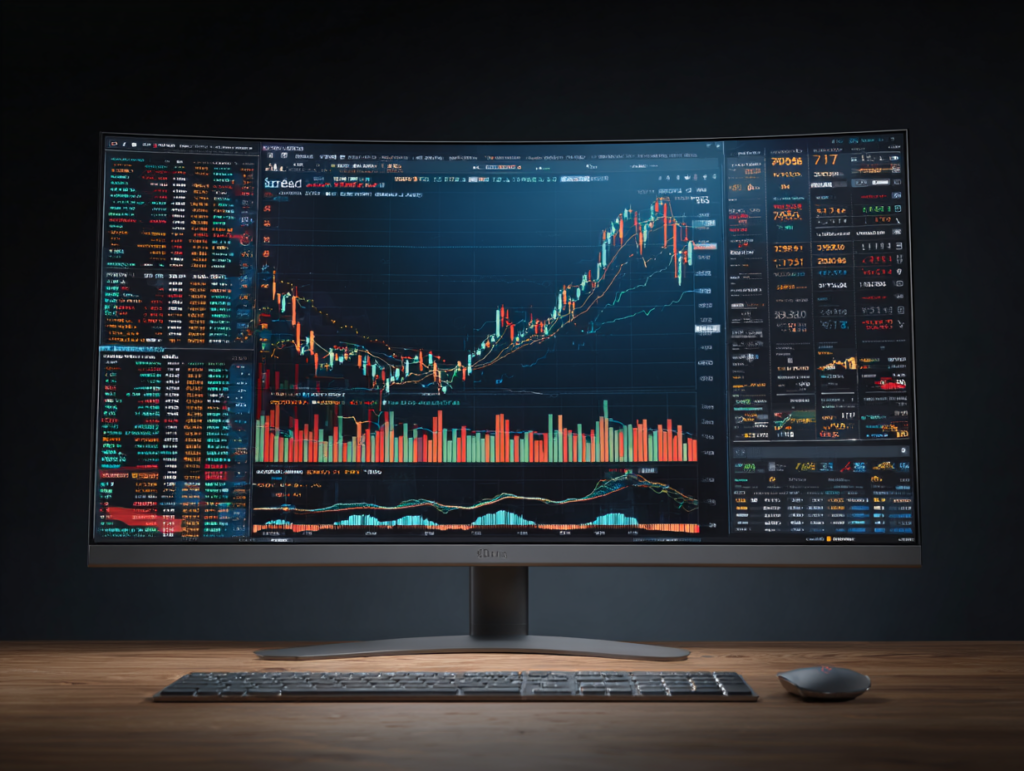
Traditionally, the stock market is described as a rational machine.
We’re told:
- markets price in information
- earnings drive value
- Technical analysis predicts movement.
But in practice, markets are human systems.
And humans are emotional.
I’ve watched markets swing dramatically because of:
- a tariff announcement
- geopolitical tension
- interest rate speculation
- a CEO making a public comment
- a single earnings call missing expectations by a fraction
Sometimes, nothing structural changes, yet trillions of dollars move because of a perception shift.
That’s not pure logic.
That’s emotion amplified at scale.
Fear Is the Strongest Market Driver
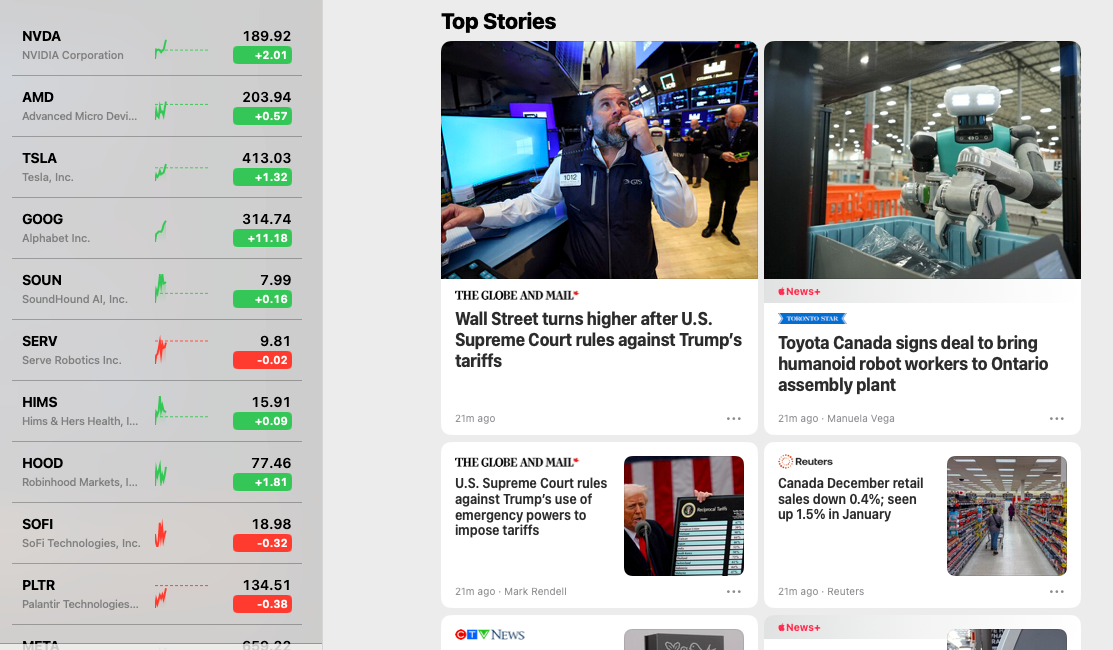
Of all emotions, fear is the most powerful.
Greed pushes prices up gradually.
Fear pulls them down violently.
Fear pulls them down violently.
When fear enters the market:
- investors sell first and analyze later
- Headlines dominate decision-making
- worst-case scenarios feel inevitable
And the speed of modern information makes it worse. Social media, 24-hour news cycles, instant notifications: they compress emotional reactions into seconds.
I’ve seen markets drop sharply, not because businesses suddenly became worthless, but because uncertainty felt unbearable.
That distinction matters.
My Personal Turning Point
Early in my investing journey, I could have reacted emotionally, too.
When markets dipped sharply during COVID, it would have been easy to say:
“Maybe I should wait.”
“Maybe this gets worse.”
“Maybe this isn’t safe.”
“Maybe I should wait.”
“Maybe this gets worse.”
“Maybe this isn’t safe.”
Instead, I asked myself one question:
Has the long-term thesis changed?
For the companies I owned, especially those positioned in AI, automation, and technology, the answer was no.
In fact, if anything, digital transformation was accelerating.
That’s when I began to understand something critical;
Market crashes driven by fear often create opportunity.
Warren Buffett Was Right
Warren Buffett famously said:
“Be fearful when others are greedy and greedy when others are fearful.”
That quote sounds simple.
But living it is much harder than repeating it.
But living it is much harder than repeating it.
When everyone is fearful, your instinct is rarely to buy.
Your instinct is to protect.
Your instinct is to protect.
But if the companies you own are fundamentally strong, and if your research is sound, moments of fear can become moments of leverage.
Some of my best investment decisions were made not in euphoric markets, but in uncertain ones. NVIDIA was one of them. Yes, I loaded up on NVDIA during COVID when it crashed.
Not because I’m fearless.
But because I learned to separate emotional waves from structural reality.
But because I learned to separate emotional waves from structural reality.
Warren Buffett’s thinking on fear, discipline, and long-term investing is explored deeply in The Essays of Warren Buffett, a book that shaped how I view emotional cycles in the market.
Buy Before Sale Ends!

The Essays of Warren Buffett: Lessons for Corporate America
- A modern classic, The Essays of Warren Buffett: Lessons for Corporate America is the book Buffett autographs...
- Its popularity and longevity over three decades attest to the widespread appetite for this definitive...

Fear vs. Fundamentals
One of the most important distinctions I’ve learned is this:
- Emotion changes quickly.
- Fundamentals change slowly.
A tariff announcement might cause panic.
A CEO tweet might trigger volatility.
An earnings miss might create a selloff.
A CEO tweet might trigger volatility.
An earnings miss might create a selloff.
But a company’s:
- cash flow
- competitive moat
- long-term positioning
- technological relevance
…does not disappear in a day.
When markets crash purely because of fear, it’s often not a destruction of value; it’s a temporary distortion of perception.
That’s where clarity matters.
How I Make Decisions in Emotional Markets
Over time, I’ve developed a simple framework:
- Zoom out first.
I look at the broader structure. Has the business model changed? Has the industry collapsed? Or is this emotional volatility? - Separate headlines from fundamentals.
News cycles are designed to provoke reaction. Businesses are built on execution. - Lean into strength.
If I’ve chosen strong companies, those with scale, infrastructure, and relevance in the AI era, I remind myself why I invested in the first place. - Act deliberately, not reactively.
Sometimes that means buying more.
Sometimes it means holding.
Rarely does it mean panic selling.
This discipline didn’t come instantly.
It developed through experience.
It developed through experience.
🔗 Related Read
How I Invest in the AI Era — And What the Stock Market Has Taught Me
A deeper look at my personal investing philosophy, how I approach AI-driven markets, and the long-term structure behind my decisions.
The Irony of Market Psychology
What I find fascinating, and slightly ironic, is how often we hear that markets are “efficient” and “rational.”
Yet anyone who has lived through volatility knows that markets can behave like a crowd at a concert:
- Excitement spreads quickly
- panic spreads even faster
- and calm returns only after exhaustion
The stock market is not just a financial system.
It’s a psychological one.
It’s a psychological one.
And once you accept that, your strategy changes.
You stop trying to predict every move.
You start preparing for emotional cycles.
You start preparing for emotional cycles.
Why This Matters in the AI Era
The AI era amplifies everything.
Valuations move faster.
Narratives shift rapidly.
Innovation accelerates.
Narratives shift rapidly.
Innovation accelerates.
When AI-related stocks surge, greed can take over.
When they pull back, fear can dominate.
When they pull back, fear can dominate.
If you’re investing in companies positioned for long-term technological change, emotional swings are part of the journey.
The key is remembering:
Short-term fear does not automatically invalidate long-term transformation.
Emotion Isn’t the Enemy — Mismanaging It Is
Emotion itself isn’t bad.
Fear protects us in real life.
Greed motivates ambition.
Greed motivates ambition.
But in the stock market, unmanaged emotion destroys returns.
I’ve learned that the goal isn’t to eliminate emotion.
It’s to understand it.
It’s to understand it.
When I feel hesitation, I ask:
Is this data-driven?
Or fear-driven?
Is this data-driven?
Or fear-driven?
When I feel excitement, I ask:
Is this conviction?
Or euphoria?
Is this conviction?
Or euphoria?
That awareness alone changes decisions.
Take Away
Everything in life works with emotion.
Relationships.
Career decisions.
Leadership.
And yes, the stock market.
Career decisions.
Leadership.
And yes, the stock market.
But unlike most areas of life, the market offers a strange advantage:
If you can remain calm while others react emotionally, you gain leverage.
Fear will always move markets.
Headlines will always amplify uncertainty.
Volatility will always exist.
Headlines will always amplify uncertainty.
Volatility will always exist.
But if you understand the difference between emotional reaction and structural change, you stop seeing fear as a threat.
You start seeing it as a signal.
A Gentle Reminder
This is not advice.
This is experience.
This is experience.
Markets are unpredictable.
Emotion is powerful.
Discipline is rare.
Emotion is powerful.
Discipline is rare.
But in my journey toward financial freedom, learning to navigate fear, instead of being controlled by it, has been one of the most valuable lessons of all.