
Why Your Home Reflects Your Mind (And How to Fix It)
Look around you: this is your mind, made visible
Take a moment.
Look at your home.
Not the curated corners.
Not the parts you would show someone.
Not the parts you would show someone.
But everything.
- the surfaces
- the drawers
- the closets
- the small piles you’ve been ignoring
Now ask yourself honestly:
Does this feel clear, or cluttered? Calm, or chaotic?
Because whether you realize it or not,
Your home is a direct reflection of your mental state.
This is not about judgment, it’s about awareness
This is not about blaming yourself.
It’s about understanding something powerful:
Your environment is not random.
It is shaped by:
- your habits
- your decisions
- your patterns
- your level of clarity
And over time,
Your environment starts shaping you back.
My personal realization
There was a time when I didn’t fully connect these two.
I thought:
- Clutter was just “stuff.”
- Disorganization was temporary
- I would “get to it later.”
But as I built a life that required:
- creativity
- clarity
- high-level thinking
- consistent output
I started noticing something very clearly:
The state of my home directly affected the state of my mind.
When my space was:
- clean
- organized
- intentional
I felt:
- clear
- focused
- creative
When my space was:
- messy
- incomplete
- cluttered
I felt:
- distracted
- overwhelmed
- mentally blocked
This wasn’t a coincidence.
It was a pattern.
Why does your home reflect your mind?
Let’s go deeper.
1. Your home reflects your decision-making
Every item in your home represents a decision:
- to keep it
- to ignore it
- to postpone dealing with it
If your home is cluttered, it often means:
Decisions have been delayed
And delayed decisions don’t disappear.
They accumulate.
2. Your home reflects your habits
Your daily habits shape your space.
- Do you put things back immediately?
- Do you let things pile up?
- Do you reset your space regularly?
Your answers become your environment.
3. Your home reflects your tolerance for chaos
Everyone has a different threshold.
Some people tolerate:
- clutter
- unfinished spaces
- visual noise
Others don’t.
And that tolerance defines your standard of living.
4. Your home reflects your mental clarity
When your mind is clear:
- decisions are faster
- systems are maintained
- Clutter is minimized
When your mind is overwhelmed:
- Things are postponed
- The organization feels it is difficult
- clutter builds
The dangerous cycle most people are stuck in
This is where it becomes powerful.
Step 1: Mental clutter creates physical clutter
- too many thoughts
- too many tasks
- too many decisions
leads to inaction
Step 2: Physical clutter increases mental clutter
- visual noise
- unfinished tasks
- constant reminders
increases overwhelm
Step 3: Overwhelm leads to avoidance
- “I’ll do it later.”
- “It’s too much right now.”
And the cycle continues.
This is why you feel stuck.
Not because you’re lazy.
Not because you lack discipline.
But because:
Your environment is reinforcing your mental state
🔗 Related Read: The Psychology of Clutter
Your home doesn’t just hold your belongings—it holds your mental state. Clutter quietly drains your focus and energy without you realizing it. This article explores how your environment shapes your thoughts and how to regain clarity.
The shift: Your home is not decoration, it’s a system
Most people treat their home as:
- a place to live
- a place to decorate
- a place to store things
But if you want clarity, your home must become:
What an organized home actually does for you
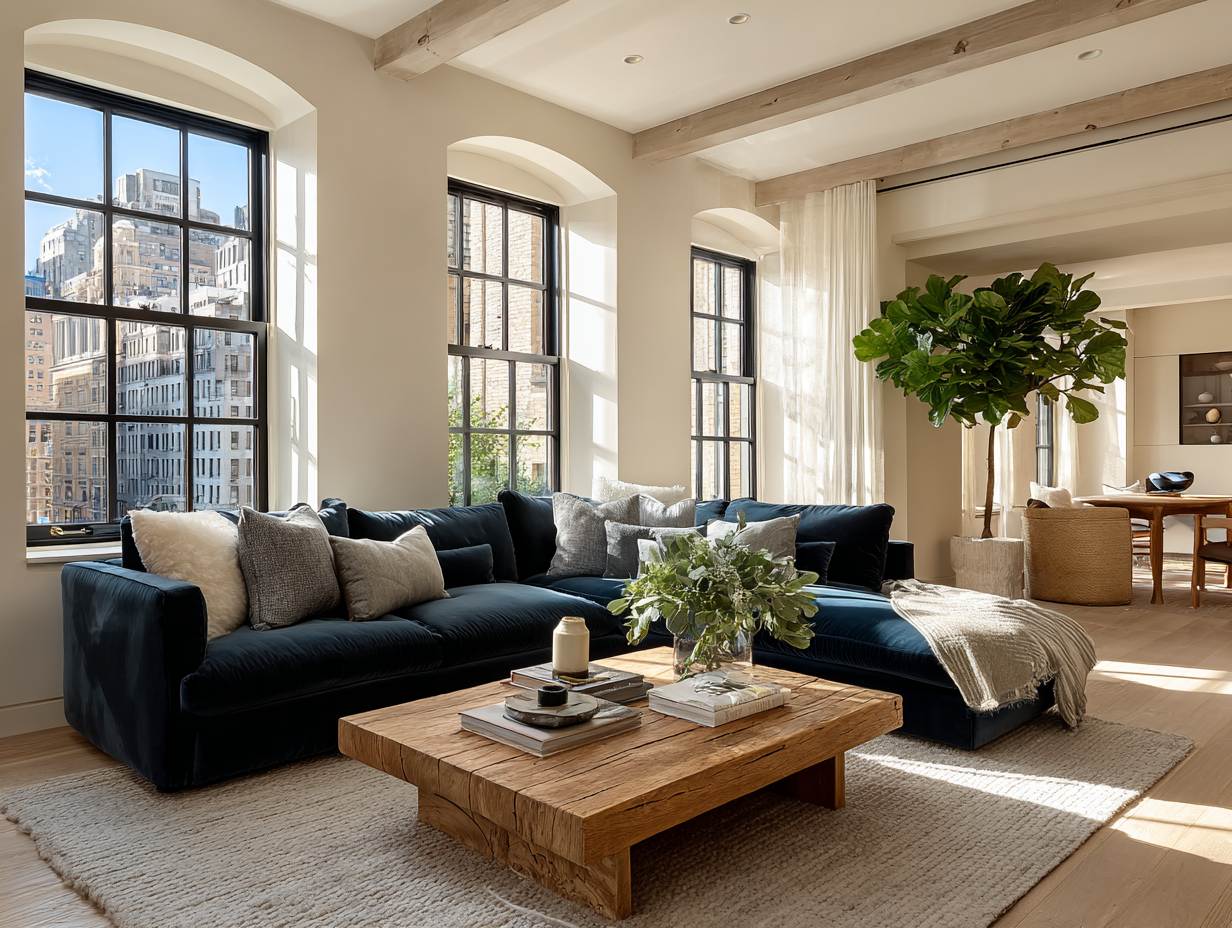
When your home is organized:
- decisions become easier
- distractions are reduced
- Your mind relaxes
- Your focus improves
You think about it. You create in it. You grow in it.
How to fix it (step-by-step)
Let’s make this practical.
Step 1: Stop organizing, start eliminating
This is the biggest mistake people make.
You can’t organize excess.
What to do:
- remove what you don’t use
- remove what you don’t need
- remove what doesn’t align with your life
Key mindset:
Less is clarity
Step 2: Create structure, not storage
Once you’ve eliminated:
Give everything a home.
Ask:
- Where does this belong?
- Is it easy to access?
- Is it easy to put back?
If it’s hard to maintain, the system is wrong.
Step 3: Design for ease, not perfection
Your home should feel:
- easy
- functional
- natural
Not:
- rigid
- complicated
- high-maintenance
Example:
If something is always left out,
Create a place for it where it’s used.
Step 4: Build a daily reset habit
This is non-negotiable.
Every day:
- put things back
- clear surfaces
- reset your environment
This prevents buildup.
Step 5: Fix your “problem zones”
Every home has them:
- the chair with clothes
- the drawer that’s always messy
- the counter that collects everything
Instead of ignoring:
- simplify
- reduce
- redesign the system
Problem zones are system failures, not personal failures.
Step 6: Connect your home to your identity
This is the most important step.
Ask yourself:
What kind of life do I want to live?
- calm?
- clear?
- intentional?
- high-performing?
Then ask:
Does my home reflect that?
If not,
Change it.
🔗 Related Read: If You’re Not Organized, You’re Limiting Your Life
Organization is not just about your space—it’s about your entire life. From your thoughts to your systems, everything becomes clearer when you remove clutter and create structure. This foundational article explores why organization is not optional—it’s the key to clarity, creativity, and growth.
The deeper transformation
When you change your home, you don’t just change your space.
You change:
- your habits
- your thinking
- your energy
- your identity
What happens when your home aligns with your mind
You:
- feel lighter
- think faster
- act with clarity
- create more easily
And most importantly,
You feel in control of your life.
Final truth
Your home is not separate from you.
It is an extension of you.
If it is:
- cluttered
- chaotic
- unfinished
Your mind will feel the same.
But if it is:
- clear
- organized
- intentional
Your mind follows.
Takeaway
You don’t need more space.
You don’t need more storage.
You don’t need better décor.
You need alignment.
Between:
- your space
- your systems
- your mind
Because once your home supports your clarity,
Your life starts to flow differently.
You stop decorating your home.
And start designing your life through it.
And start designing your life through it.