
How to Build Protein and Fiber-Rich Meals on a Regular Basis
A calm, realistic system that works even on busy days
For years, I thought eating “healthy” required constantly rotating recipes, tracking macros, or planning every meal in advance. It worked for a while, but it became mentally exhausting.
What finally made the difference was breaking food down into a structure I could repeat, rather than relying on daily decisions.
High-protein, high-fiber eating makes you feel full longer, improves daily energy, and leads to healthier choices effortlessly.
To make things easier, I use and share a system for building protein and fiber-rich meals, ensuring you don’t need to count, worry, or second-guess.
The Core Principle: Protein + Fiber = Satiety
Every satisfying meal has two non-negotiables:
- A protein anchor → for muscle, metabolism, and fullness
- A fiber base → for digestion, blood sugar stability, gut health, and appetite control
With both, you feel satisfied, experience steady energy, and have fewer cravings, making balanced eating easier.
Instead of starting meals with “What should I cook?” I focus first on, “Where is my protein, and where is my fiber?” This shift sets the foundation for every step that follows.
Step 1: Choose One Protein Anchor Per Meal
Think of protein as the center of gravity of your meal.
You don’t need new options all the time; steadiness matters more.
Easy protein anchors to rotate:
- Chicken
- Eggs or egg whites
- Greek yogurt
- Seafood (salmon, tuna, cod, shrimp)
- Lean beef or turkey
- Tofu, tempeh, or lentils
- Protein powder (especially for breakfast or dessert)
👉 Aim for 30–45g of protein per meal.
Three solid meals can easily get you to 100g+ without tracking.
Three solid meals can easily get you to 100g+ without tracking.
Step 2: Add Fiber Automatically (No Measuring)
Fiber is simple; just remember to include it consistently.
Instead of counting grams, use visual rules:
High-fiber additions to rotate:
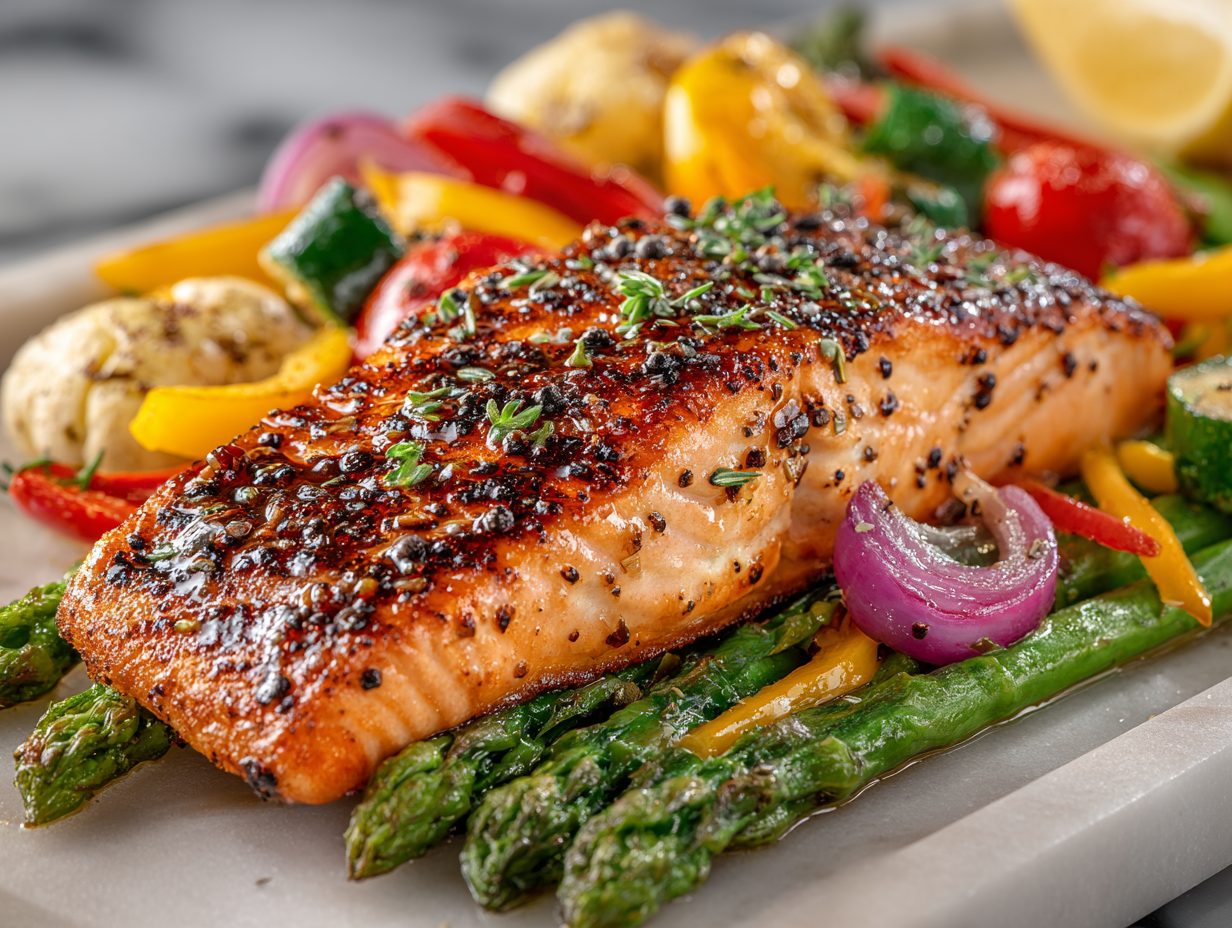
- Vegetables: Brussels sprouts, broccoli, asparagus, bell peppers, leafy greens
- Fruits: berries, kiwi, apples, pears
- Starches: sweet potatoes, potatoes, oats
- Legumes: lentils, chickpeas, beans
- Seeds: chia, flax, hemp
My simple rule:
Every meal gets at least one fiber-rich food, ideally two. I aim for 25g+ fiber daily.
Want to Go Deeper?
These two foundational guides explain why protein and fiber work so well together — and how to build a lifestyle around them without overthinking food.
Step 3: Build Meals Using Repeatable Templates
This is where consistency becomes effortless.
Rather than sticking to specific recipes, build meals around frameworks that suit your needs.
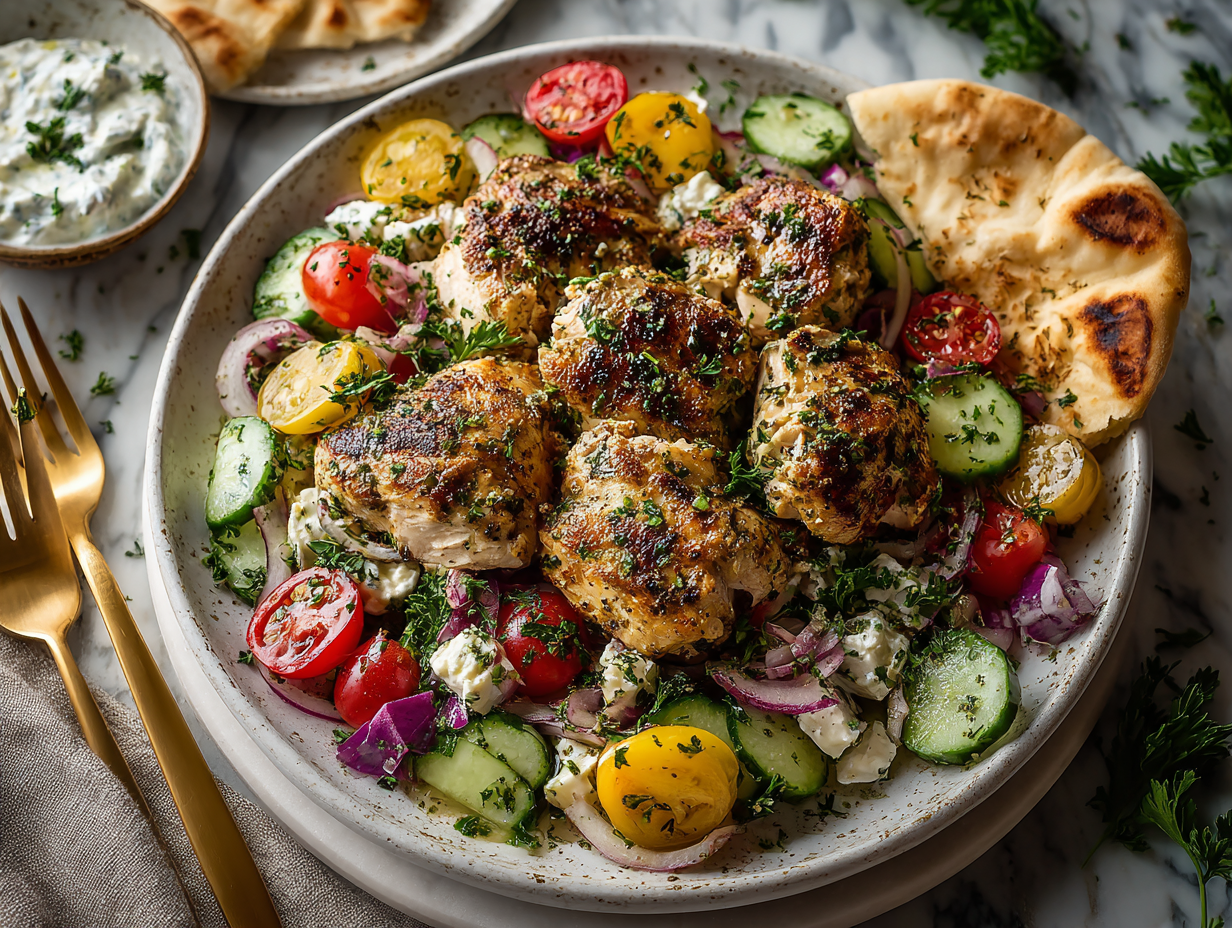
The Protein + Veg Plate
- Protein anchor
- 1–2 cooked vegetables
- Optional starch
Example:
Chicken + roasted Brussels sprouts + sweet potato
Chicken + roasted Brussels sprouts + sweet potato
The Protein Bowl
- Protein anchor
- Fiber-rich base (lentils, quinoa, vegetables)
- Simple dressing or fat
Example:
Lentils + grilled fish + greens + olive oil
Lentils + grilled fish + greens + olive oil
The Protein-Rich Breakfast
- Smoothie with Protein powder or Greek yogurt
- Fruit
- Fiber add-in
Example:
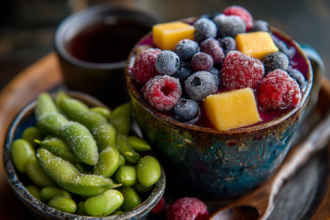
Greek yogurt + berries + raw honey
Greek yogurt + berries + raw honey
Step 4: Use Grocery Rules, Not Willpower
Consistency comes from what’s in your fridge.
I grocery shop with categories, not meal plans:
- 2–3 protein anchors
- 2–5 vegetables
- 2 fruits
- 1–2 fiber boosters from my pantry (lentils, seeds, oats)
When these staples are ready, healthy meals are fast, automatic, and nearly effortless.
Step 5: Repeat More Than You Rotate
One of the biggest mindset shifts:
Eating the same structure is not boring; it’s freeing.
You can change flavors, sauces, or vegetables while keeping the foundation unchanged.
This habit creates lasting, effortless, healthy eating that naturally fits your lifestyle.
The Quiet Power of This System
When protein and fiber are built into every meal:
- Hunger becomes predictable
- Energy stabilizes
- Snacking naturally fades
- Portions self-regulate
- Body composition shifts in a positive direction with consistent protein and fiber intake, no force or willpower required.
This is why I don’t believe in food rules,
I believe in food rhythms.
I believe in food rhythms.
Once you master the rhythm, steady progress and healthy habits follow automatically.