

Are You Conflicted About Using AI? You’re Not Alone.
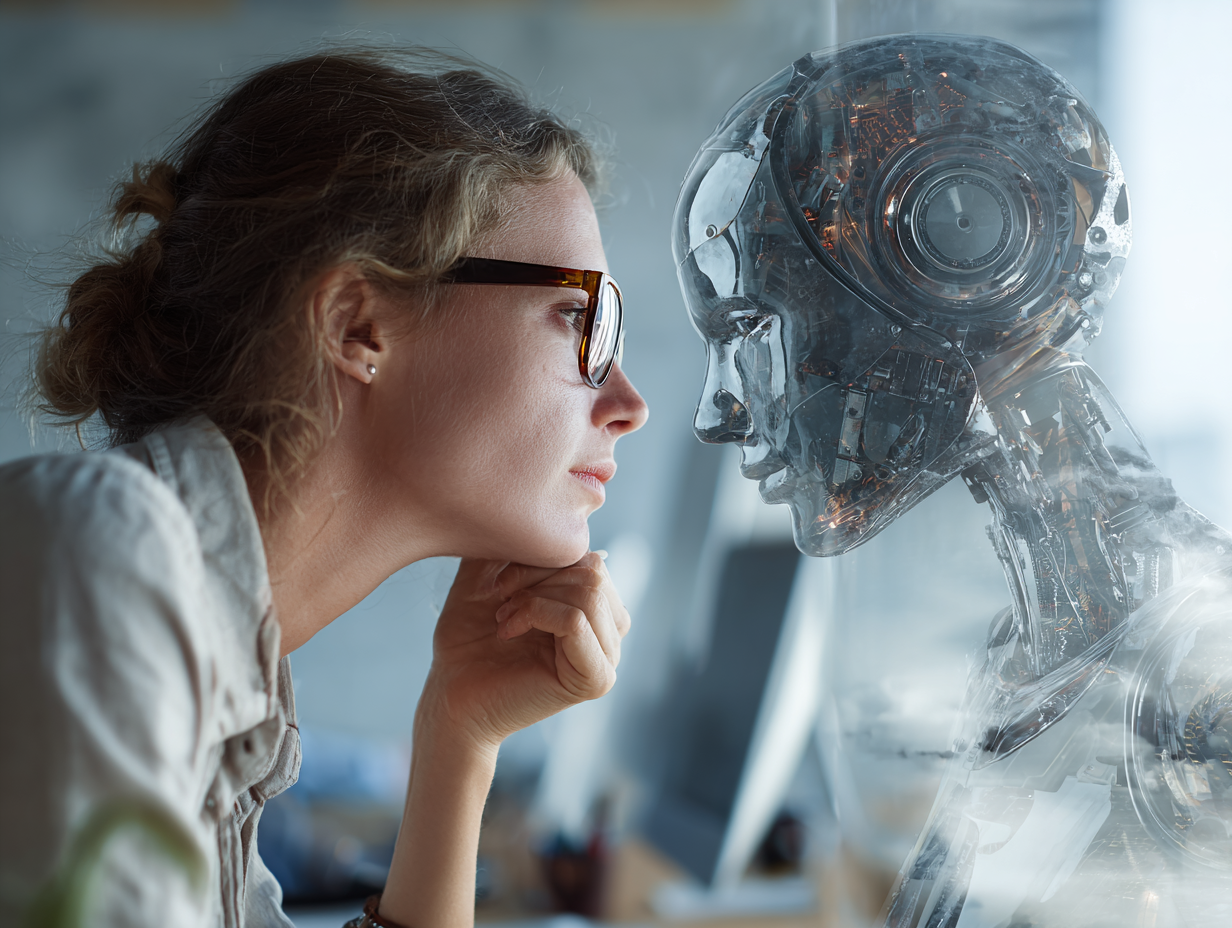
Many people today struggle with using AI tools.
Some struggle for emotional reasons, the fear that AI is replacing other people’s jobs.
Some struggle for creative reasons, the discomfort of knowing that something once made slowly, manually, and with care can now be produced faster by a machine.
Some struggle for creative reasons, the discomfort of knowing that something once made slowly, manually, and with care can now be produced faster by a machine.
For many, these reasons combine into a single, complex tension.
In creative industries like fashion, design, writing, illustration, and marketing, I’ve witnessed this tension: graphic designers worry about being replaced, writers wonder if their work will matter, and artists question originality, effort, and value.
But this discomfort isn’t unique to AI.
It’s a feeling humanity has experienced every time technology has advanced.
And that perspective, understanding where AI fits in the long arc of human progress, is often the missing piece that helps people move from resistance to clarity.
The Real Conflict Isn’t AI, Really, it’s not AI, it’s Change.

When people say they’re “conflicted about AI,” what they’re often really saying is:
- I’m afraid of becoming irrelevant.
- I’m worried the work I value won’t be valued anymore.
- I don’t like that something meaningful can now be done faster.
- I’m unsure where humans fit in this new system.
These are deeply human concerns.
The most important reframing is this: technology’s survival isn’t up to individuals. Consumers decide.
Not companies, creators, or even governments.
Not creators.
Not even governments, ultimately.
Not creators.
Not even governments, ultimately.
If people find value or meaning in something, adoption follows, and the world changes.
A Simple Truth We Often Forget
It’s easy to get caught up in conflicting information:
- Headlines about jobs disappearing
- Think pieces about creativity dying.
- Viral posts warning us to “resist AI.”
But when that noise gets overwhelming, zoom out.
Think about how everything you now consider “normal” once felt threatening.
Let’s walk through a few examples.
The Pattern of Evolution (We’ve Seen This Before)
1. Before Computers, There Were Typewriters
Before keyboards and screens, there were typewriters, and before that, handwritten manuscripts.
When computers arrived, many believed:
- Typists would lose their jobs.
- Writing would become careless.
- Skill would disappear
Instead, writing expanded. Publishing exploded. Ideas traveled faster.
The tool changed, but the expression did not disappear.
2. Before Email, There Were Fax Machines
Fax machines were once revolutionary. Offices invested heavily in them. Entire workflows depended on faxing documents.
Then the email arrived.
Faster. Cheaper. More efficient.
Fax machines didn’t vanish overnight, but eventually, they became obsolete.
Progress didn’t ask permission.
3. Before the Internet, There Were Encyclopedias
People once trusted physical encyclopedias as the ultimate source of knowledge. They were expensive, authoritative, and revered.
Then the internet arrived.
Did it destroy knowledge?
No, it democratized it.
No, it democratized it.
The skill shifted from accessing information to evaluating it.
4. Before Streaming, There Was Cable TV
Cable companies resisted streaming platforms. Studios feared piracy and loss of control.
Consumers chose convenience.
Streaming won. Netflix became a household name.
5. Before Uber, There Were Taxis
And this one is personal.
I traveled to New York weekly for work, where catching a taxi could be stressful, especially during peak hours.
You’d wait on the street, hoping for a cab to stop.
Wave your arm.
Hope someone stopped.
Wave your arm.
Hope someone stopped.
When Uber arrived, taxi drivers were furious, and understandably so. Their entire livelihood felt threatened.
But from a consumer standpoint?
Uber made life easier.
More predictable.
More transparent.
More predictable.
More transparent.
I’ve used Uber worldwide. It solved a real issue.
Once consumers experienced this ease, they didn’t turn back.
6. Before Online Shopping, There Were Only Physical Stores
Retail workers feared job losses. Brands feared dilution.
Consumers chose convenience again.
And retail didn’t disappear — it evolved.
7. Before AI, There Were Assistants

This one matters deeply.
Tasks that were once required:
- Personal assistants
- Junior team members
- Interns
They are now often handled by AI tools.
Scheduling. Drafting. Research. Organization.
The work didn’t disappear; it was reassigned.
The Uncomfortable but Honest Reality
Here’s the part we don’t like to admit: Our feelings about AI don’t dictate its adoption.
Technology adoption is driven by behavior, not morality.
Consumers decide:
- What they use
- What they pay for
- What they keep returning to
And consumers care about:
- Quality
- Ease
- Value
- Experience
Not the method behind the scenes.
Creativity Isn’t Disappearing, It’s Being Repositioned
One of the biggest fears I hear is:
“If AI can do this faster, what’s the point of my creativity?”
Here’s the truth:
Speed has never been the same thing as creativity.
AI can:
- Draft
- Generate
- Assist
- Organize
But it does not:
- Feel
- Taste
- Intuit
- Desire
- Understand nuance the way humans do
AI does not wake up with a lived experience.
AI does not have cultural memory.
AI does not feel emotional tension or curiosity.
AI does not have cultural memory.
AI does not feel emotional tension or curiosity.
Humans are still behind:
- The ideas
- The taste
- The judgment
- The emotional resonance
AI accelerates execution but doesn’t replace intention.
The Consumer Will Always Decide What’s “Good”
This is the most grounded perspective of all:
Good work will always be appreciated, regardless of how it was created.
Consumers don’t ask:
- Was this written with AI?
- Was this design sketched by hand?
- Was this brainstormed alone?
They ask:
- Does this resonate with me?
- Does this solve my problem?
- Do I like how this feels?
If the answer is yes, the work stands.
If the answer is no, the method doesn’t matter.
Think of AI as the New Assistant
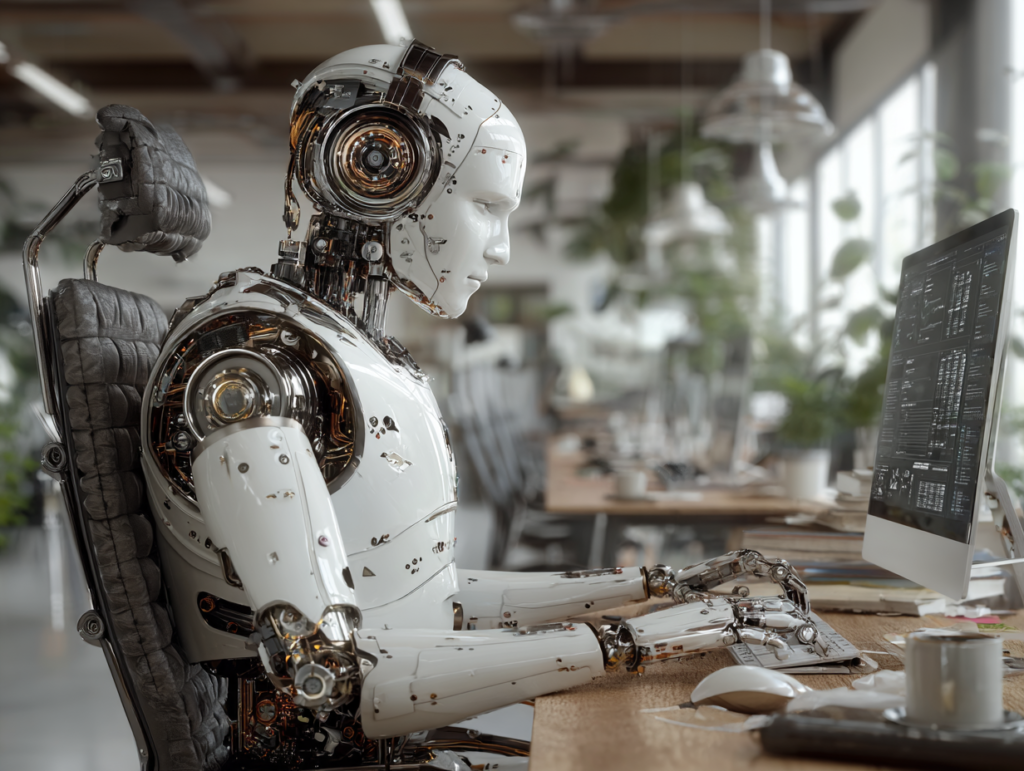
Here’s a mental reframe that removes fear instantly:
Imagine you had a physical assistant years ago.
You would delegate:
- Drafting emails
- Organizing notes
- Scheduling tasks
- Researching options
Did that make you less capable?
No.
It made you more focused.
It made you more focused.
AI tools are simply:
The modern assistant: scalable, fast, and always available.
The vision still comes from you.
Productivity Is Rising, And That’s Not a Bad Thing
One of the most overlooked positives of AI is this:
People with ideas but limited resources can now build.
- Solo creators can execute faster.
- Entrepreneurs can test ideas cheaply.
- Learners can self-educate deeply.
- Small teams can think bigger.
AI lowers friction.
And when friction lowers, creativity often increases, not decreases.
This is a theme explored deeply in articles like
“AI Won’t Replace You. But Someone Who Uses AI Will.”
and
“Googling Is Out, Prompting Is In: The Essential Skill of the AI Era.”
“AI Won’t Replace You. But Someone Who Uses AI Will.”
and
“Googling Is Out, Prompting Is In: The Essential Skill of the AI Era.”
The people who thrive aren’t the ones who resist tools; they’re the ones who learn to direct them.
The Cost of Refusing to Adapt
This part is uncomfortable, but necessary.
History shows us something clearly:
Those who refuse to adapt don’t preserve the past,
They get left behind by the future.
That doesn’t mean abandoning values.
It means updating your methods while protecting your identity.
It means updating your methods while protecting your identity.
AI is not a trend.
It’s not a phase.
It’s essential and here to stay.
It’s not a phase.
It’s essential and here to stay.
AI’s influence is just beginning.
The Healthiest Mindset Moving Forward
If you’re struggling with AI, try this perspective:
- You don’t have to love every tool.
- You don’t have to use everything.
- You don’t have to abandon craftsmanship.
But you do need to stay aware.
The question is no longer:
“Should I use AI?”
The question is:
“How do I use it intentionally, ethically, and creatively?”
That’s the mindset explored across the AI Education Series, especially in pieces like
“AI Terminology Everyone Should Know” and
“Would an AI Agent Hire You?”
“AI Terminology Everyone Should Know” and
“Would an AI Agent Hire You?”
Take Away: This Isn’t the End of Creativity, It’s a Test of it.
AI is not here to erase human contribution.
It’s here to test:
- Taste
- Judgment
- Original thinking
- Emotional intelligence
The people who rise won’t be the fastest producers.
They’ll be the clearest thinkers.
Clarity is your greatest asset—and your compass for thriving as technology evolves. Embrace this moment, lead with intent, and know that those who choose courage, creativity, and focus will shape what comes next.